Autonomous AI-Driven Supply Chain Intelligence
Transform your supply chain with our proprietary agentic AI ecosystem that delivers autonomous decision-making, predictive insights, and measurable ROI across forecasting, planning, and execution.







Our Agentic AI Replenishment Ecosystem
A suite of proprietary AI assets and accelerators that enable autonomous, context-aware decision-making across forecasting, planning, and execution. These tools combine real-time sensing, predictive and prescriptive modeling to reach measurable gains in accuracy, responsiveness, and resilience. Designed to be scalable in a fast-changing tech landscape, the framework minimizes technology dependence and supports gradual development to ensure ROI throughout deployment.
One fits all vs. best of breed
Off-the-shelf, one-size-fits-all supply chain solutions promise broad applicability but often fall short in delivering true optimization. These large platforms are designed to cover general needs across industries, inevitably lacking the fine-tuned customization to address unique workflows or specialized operational nuances. As a result, they can become rigid and bulky, forcing organizations to adapt their processes rather than enabling flexibility and efficiency. Best-of-breed solutions, on the other hand, act as focused add-ons that complement and enhance the backbone system by providing targeted capabilities. These modular tools excel in addressing specific challenges with tailored features, enabling companies to achieve higher optimization and agility. By combining a robust core with specialized add-ons, organizations gain both stability and the ability to innovate and refine their processes beyond what "one solution fits all" platforms can offer. This layered approach ultimately delivers more precise, scalable, and cost-effective performance improvements, going the extra mile where generic solutions cannot.
Off-the-shelf, one-size-fits-all supply chain solutions promise broad applicability but often fall short in delivering true optimization. These large platforms are designed to cover general needs across industries, inevitably lacking the fine-tuned customization to address unique workflows or specialized operational nuances. As a result, they can become rigid and bulky, forcing organizations to adapt their processes rather than enabling flexibility and efficiency. Best-of-breed solutions, on the other hand, act as focused add-ons that complement and enhance the backbone system by providing targeted capabilities. These modular tools excel in addressing specific challenges with tailored features, enabling companies to achieve higher optimization and agility. By combining a robust core with specialized add-ons, organizations gain both stability and the ability to innovate and refine their processes beyond what "one solution fits all" platforms can offer. This layered approach ultimately delivers more precise, scalable, and cost-effective performance improvements, going the extra mile where generic solutions cannot.
Forecasting Framework
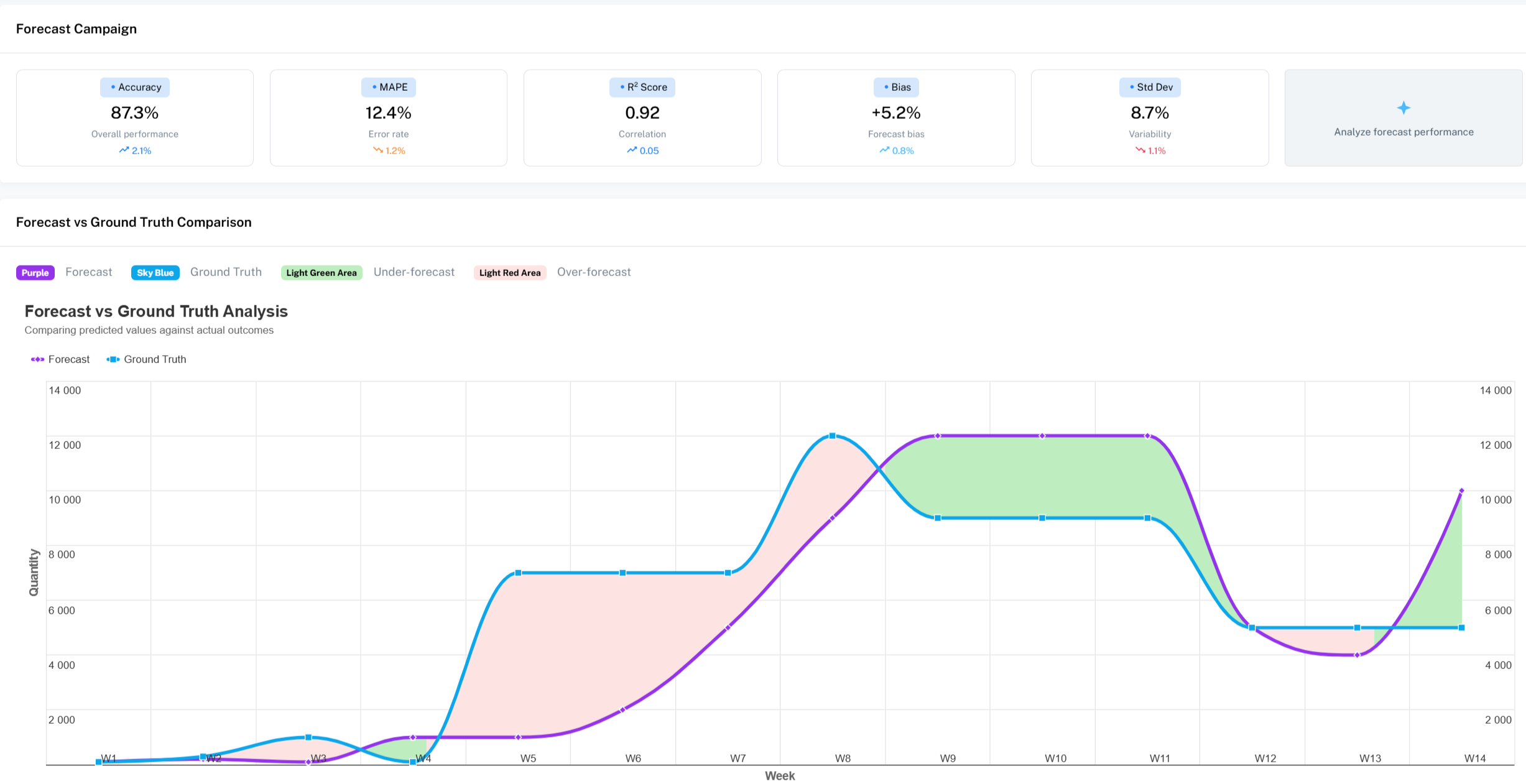
A Mixture-of-Experts engine combining Temporal Fusion Transformers (TFT), Foundational pre-trained models such as TimeGPT and others for multi-echelon and multi-horizon forecasting. Provides consistent and adaptive predictions across regions, categories, and time scales.

Demand & Risk Sensing Agent
LLM-powered sensor interpreting market, news, and social signals to detect demand shifts or supply disruptions before they impact operations.
Dynamic Safety Stock Optimizer
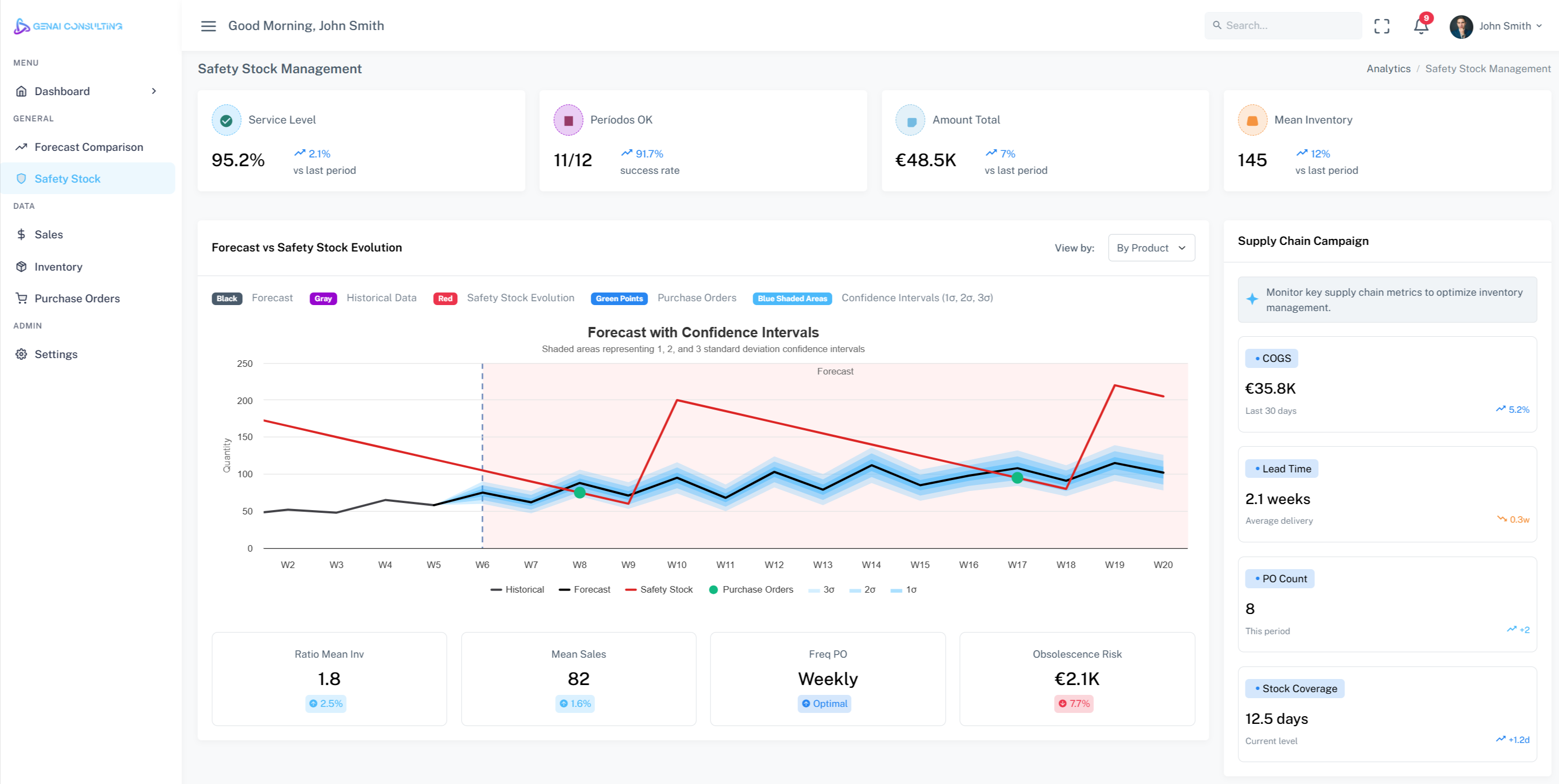
An AI-driven module that dynamically adjusts safety stock levels using reinforcement learning and bullwhip-effect mitigation. Balances service level, cost, and uncertainty in real time.
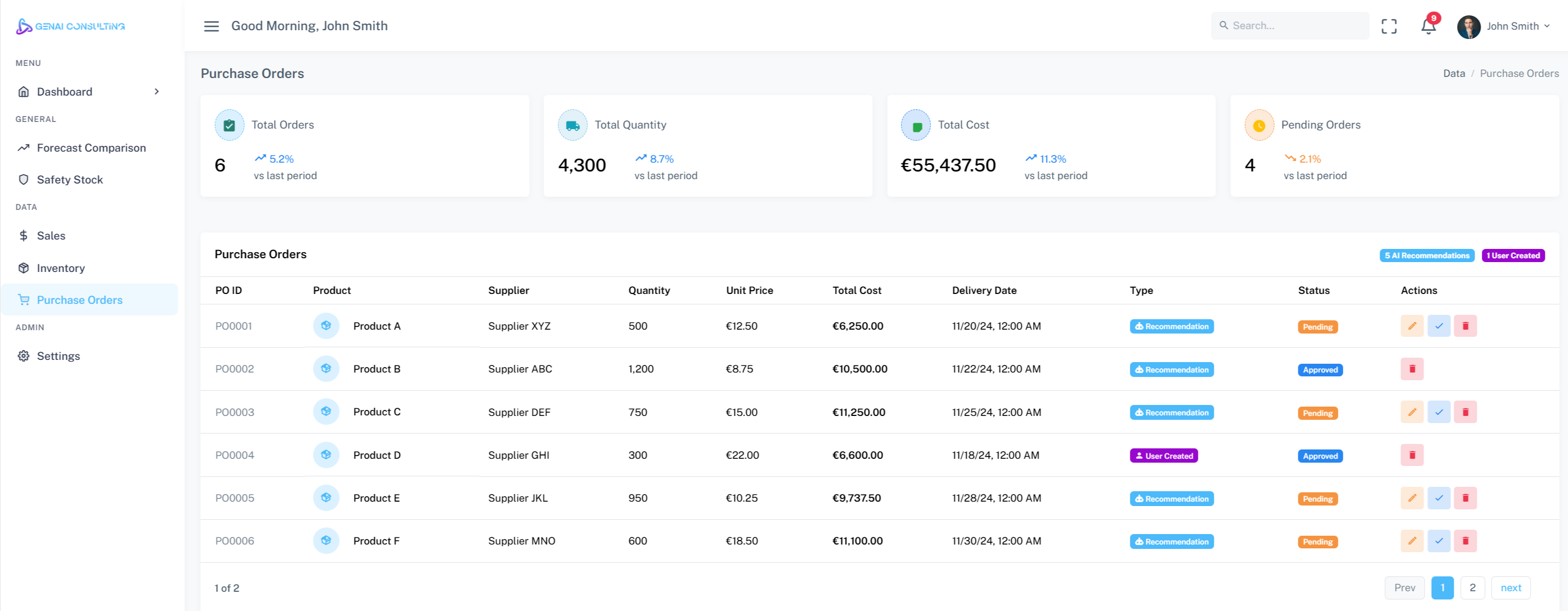
Purchase Order Generator
A reasoning engine that synthesizes forecasts, safety stock estimation, risk assessment to automatically create optimized purchase orders. Integrates KPI impact simulation and scenario testing.
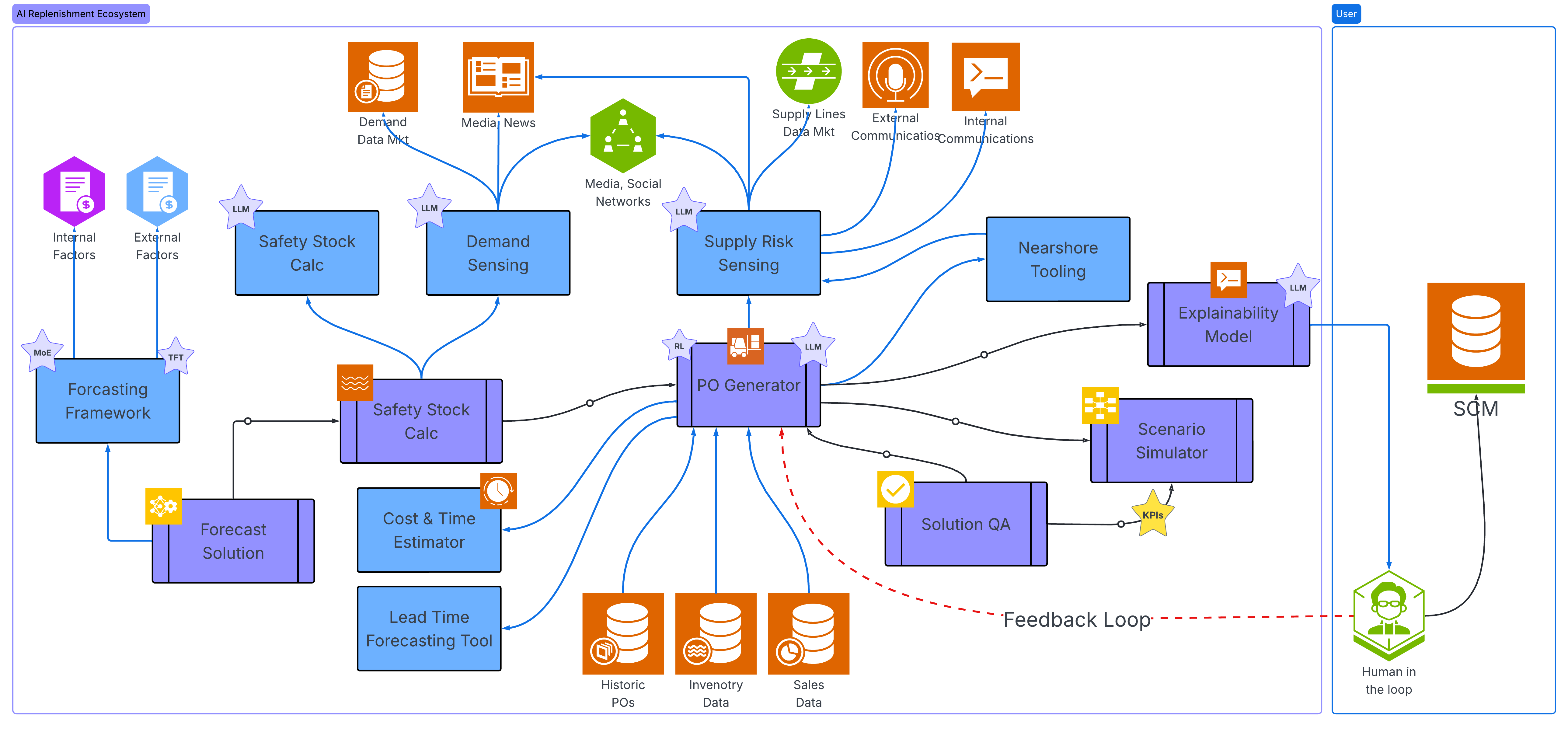
Agentic AI Replenishment Architecture
The orchestration layer connecting all agents — forecasting, optimization, sensing, and reasoning — into a closed decision loop with human feedback, ensuring transparency, explainability, and continuous learning.
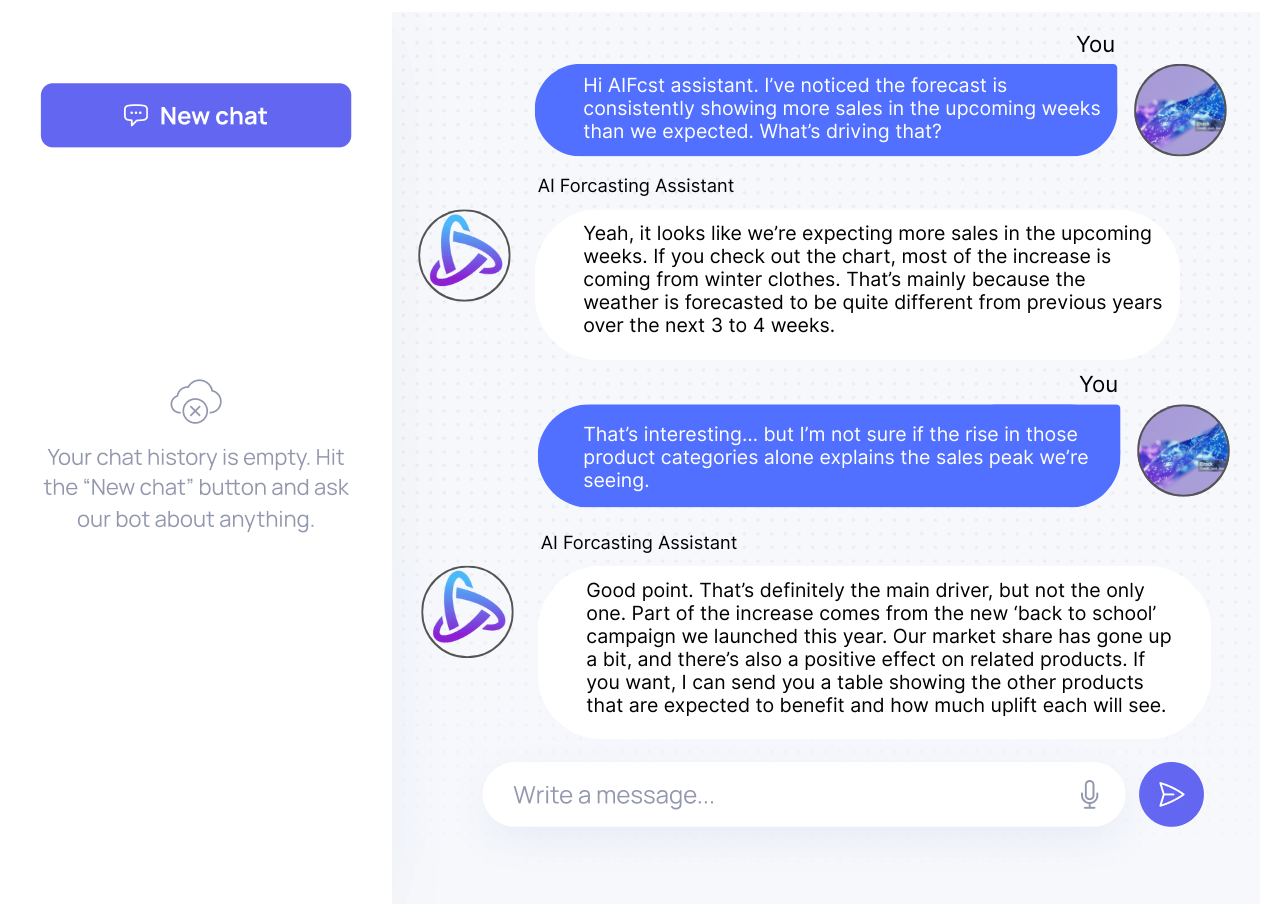
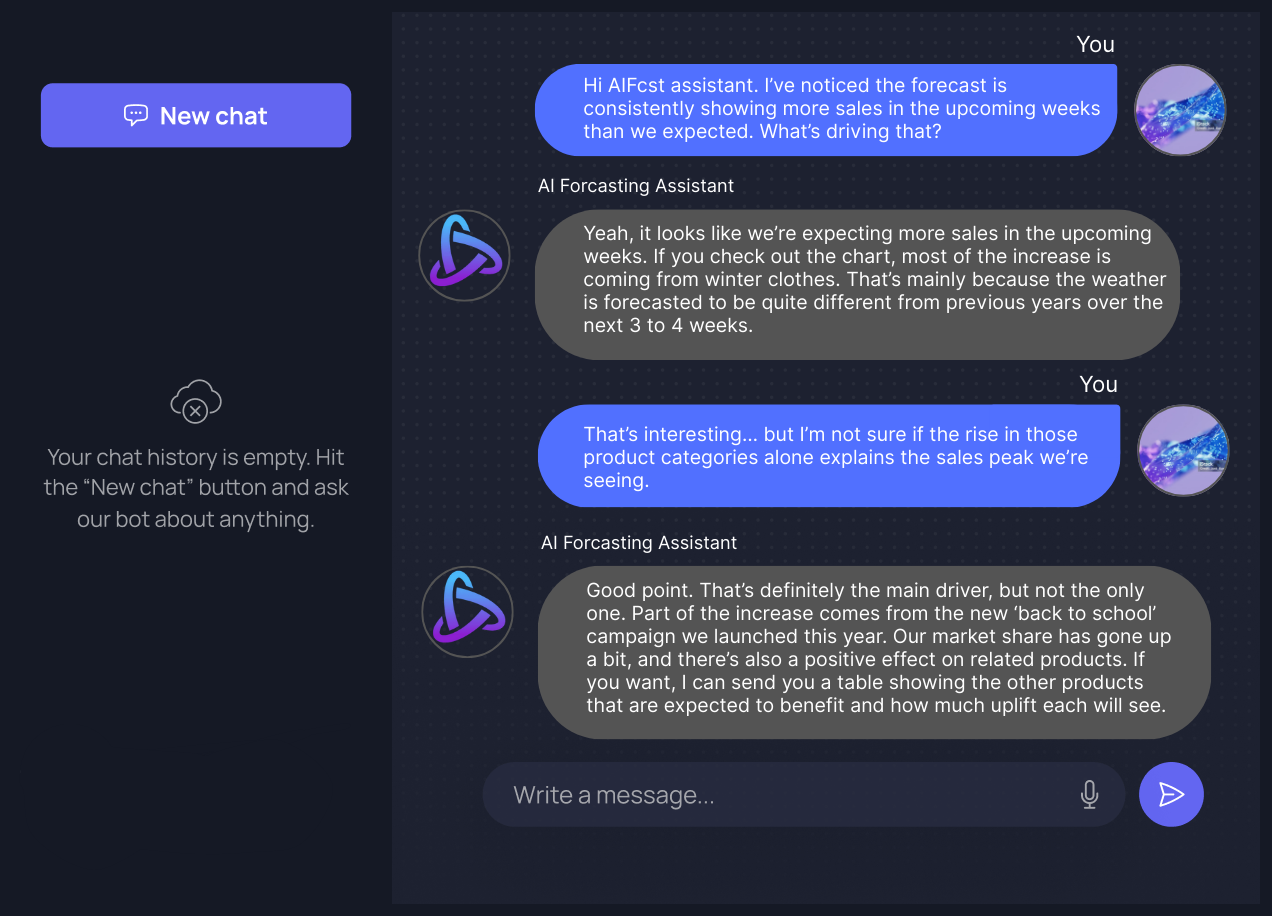
Explainability & Human-in-the-Loop Module
Provides transparent decision rationales, supports human oversight, and enables continuous feedback for model improvement and trust.